
ByJohn A
Common Reason Why DGFT Export License Applications Get Rejected
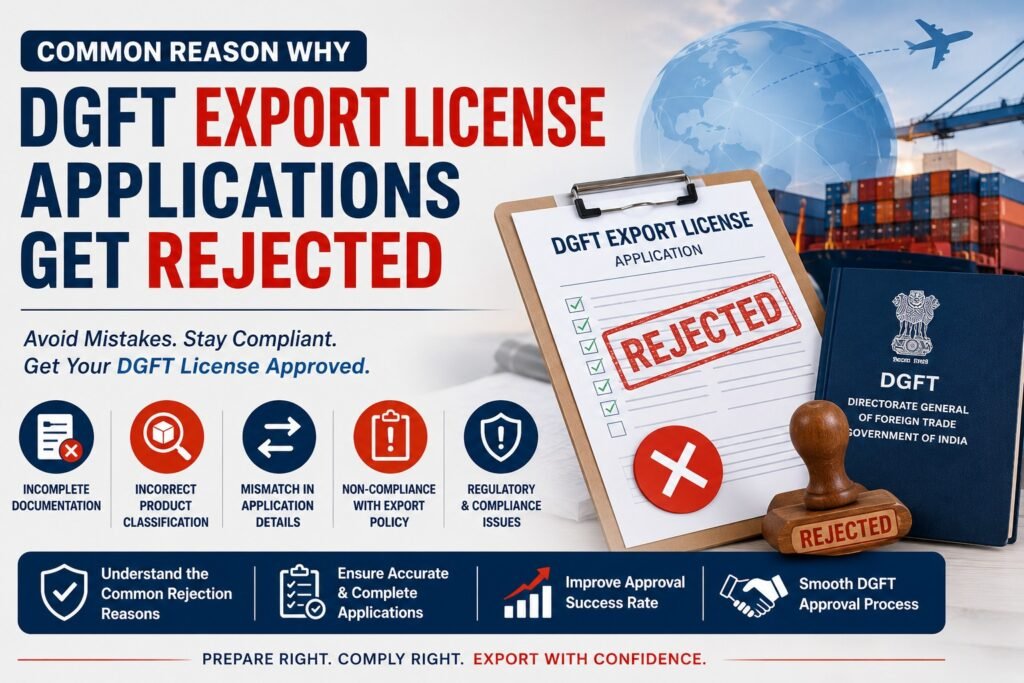
In certain cases, the exportation of goods from India may need the regulatory approvals of the Directorate General of Foreign Trade (DGFT). Companies engaged in restricted, controlled or regulated product importing/exporting need to have a valid DGFT Export License to export restricted, controlled or regulated products. The application process seems simple, but documentation problems, compliance issues, and procedural errors often cause delays or outright rejection of applications.
With the knowledge of common causes of DGFT Application Rejection, exporters can better prepare their applications and increase their chances of getting approved. This guide explains main Rejections of application and significance of DGFT Approval Process and steps to get DGFT Permission for Export successfully.
1. What is DGFT Export License?
The Directorate General of Foreign Trade (DGFT) issues a DGFT Export License to allow exporters to export certain restricted items from India. Some products are not accessible for export without the approval of DGFT or other relevant authorities for export.
DGFT Export Authorization is the process of obtaining export licenses to guarantee adherence to India’s trade policies, national security, and obligations. Before exporting, businesses involved must go through the DGFT Approval Process.
The export license India is an approval granted by the government that allows exporters to legally engage in transactions with restricted items and comply with government regulations.
2. What do DGFT exports license are rejected?
It is generally an incomplete or inaccurate application information provided while applying for DGFT that leads to DGFT Application Rejection. DGFT reviews each application submitted before issuing DGFT Permission for export and even small errors can cause the delay or rejection of the export applications.
It will help the applicant to avoid any complications during the DGFT Approval Process by understanding these issues.
3. Incomplete Documentation
Incomplete documents are one of the main reasons for the rejection of DGFT Applications. There are numerous exporters who don’t attach supporting documents necessary for the generation of an Export License.
Lack of declarations, technical specifications, authorization letters or even business registration can lead to objections by the authorities. Documentary evidence plays a major role in the DGFT Approval Process and it is imperative that all necessary documentary evidence is submitted in the prescribed format.
4. Incorrect Product Classification
A correct product classification is essential in order to qualify for a DGFT Export License. One of the most common errors made by exporters is in selecting the correct HS Code or export category for what they are exporting.
The wrong classification could result in authorities believing that the applicant is applying for the wrong DGFT Export Authorization or that the applicant is trying to export goods without the proper authorization. These mistakes can lead to rejection of the DGFT application and may need to be re-filed.
5. Mismatch in Application Details
Another common cause is when application details on the application do not match with the supporting documents. Variations in details of Companies, Product description, quantities of export etc. may cause uncertainty in DGFT Approval Process.
As part of the application process for DGFT Permission for Export, exporters need to ensure that all the details provided in the applications are correct and consistent throughout. There may be a delay in getting approval or a DGFT Application Rejection notice if there are minor differences.
6. Non-conformance of Export Policy Requirements
There are specific conditions in the export policy which have to be fulfilled for DGFT Export Authorization to be issued for some products. Not meeting these criteria is a significant determinant in rejection.
Applicants for an Export License India need to make sure that they meet all the policy requirements, end use restrictions, licensing conditions and regulatory requirements. In most cases, if the conditions are not met, the DGFT Permission for Export is denied.
See also: How Wichita’s Shipping Helped Businesses Expand Into New Markets
7. Failure to provide technical information.
Technical specifications, product descriptions, end user information or certifications may be needed by DGFT for many restricted products. Sometimes DGFT application is rejected due to inadequate technical information.
The DGFT Export License application must clearly indicate the product, its use, the country of export and the technical standards, if applicable. This facilitates authorities in processing the request efficiently in the DGFT Approval Process.
8. Regulatory and Compliance Issues
Compliances that are not resolved may lead to problems in getting DGFT Permission for Export. The applicants’ regulatory history may be reviewed by the authorities before issuing a DGFT Export Authorization.
In order to get Export License India approval without any hassle, you need to maintain proper compliance records, fulfill reporting requirements and follow export regulations.
9. How to Avoid DGFT Application Rejection
Careful preparation and compliance management are the best ways to prevent DGFT Application Rejections. Exporters should check all documents, check Product Classification and confirm that all the information provided in the DGFT Approval Process is complete and accurate.
A detailed scrutiny of export policy requirement also is advised before applying for DGFT Export License. When business is aware of regulations they have more chances of getting DGFT Permission for Export without delay.
Professional help can also be provided in navigating the DGFT Approval Process especially in case of highly regulated or restricted products.
Importance of Compliance in DGFT Export Authorization
Compliance is very important for the acquisition of an Export Authorization (DGFT) and its maintenance. Regulatory agencies require exporters to abide by trade policies, keep accurate records and comply with licensing requirements.
If the compliance is not observed, it can also lead to the rejection of the DGFT Application or suspension of export privileges or other action of enforcement. It is important for businesses to make sure that they are compliant with the DGFT Export License throughout its lifecycle if they are looking toward the long haul in international business.
10. Conclusion
The DGFT Export License is one of the essential requirements for export businesses in India of restricted goods. The DGFT Approval Process aims to ease the process of legitimate exports, however, there is a high rate of rejection of applications due to incomplete documentation, incorrect classification of products, a failure to adhere wi
th the policy and incorrect inputs provided.
Knowing the reasons for DGFT Application Rejection, having adequate record keeping, and following regulatory requirements can greatly increase the likelihood of getting DGFT Permission for Export. Having a good application with correct information is essential to get a valid Export Authorization certificate from DGFT and facilitate international trade operations.
Frequently Asked Questions
1. Which documents are needed in the case of an application for DGFT export licence?
Typically, documents are in relation to the IEC, Company incorporation documents, product specifications, authorization letters, technical details, export contracts, declarations and other documents that are necessary for obtaining a DGFT Export License.
2. What is the way to prevent rejection of DGFT export license application?
To prevent DGFT Application Rejection, ensure that all documents are complete, product classification is accurate, export policy conditions are met and information supplied at the DGFT Approval Process is accurate and consistent.
3. What is the time limit required for the DGFT to process the application for export license?
The time taken for a DGFT Export Authorization depends on the product type, compliance and completeness of documents. Time scales vary from a few weeks to months.
4. What are the products that need a DGFT export license?
In general, products falling under the restricted category in India’s export policy are required to have an Export License from DGFT. These can include some chemicals, agricultural products, dual use and defence products, and other regulated commodities.
5. Why it is important to comply to DGFT export authorization?
Compliance is a must as authorities check the compliance with the regulations before granting the DGFT Permission for Export. In a DGFT Application, if the compliance practice is strong, there will be a nominal or less chance of DGFT Application rejection and the DGFT Application will be approved easily in DGFT Approval Process.
